
The role of Catholic values in the future of fintech
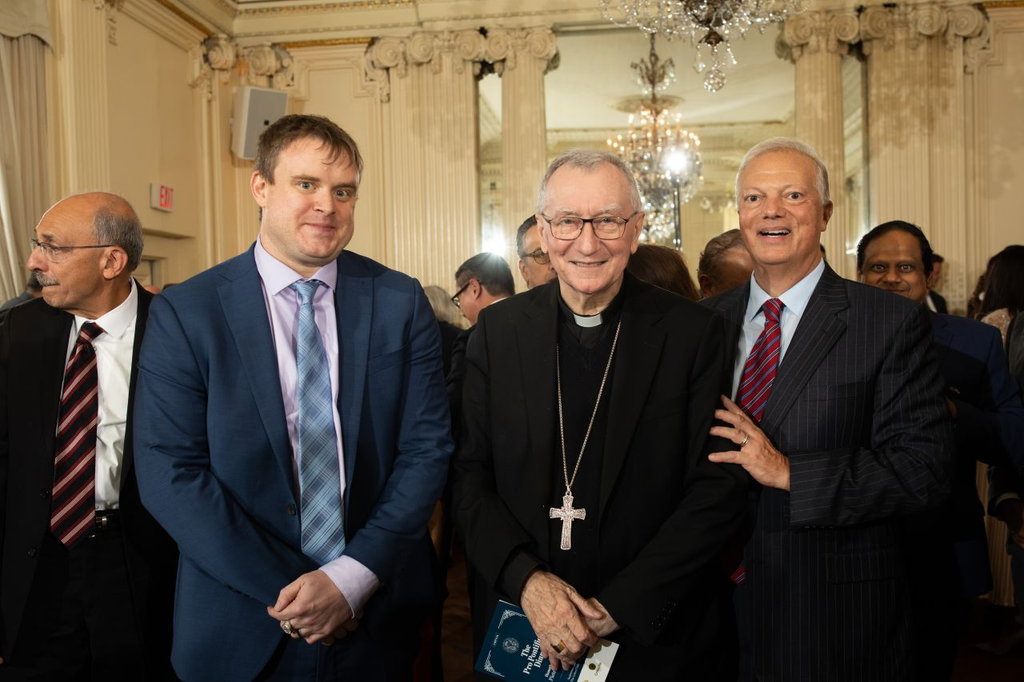
Financial technology startups are developing new ways to move money, access capital, and participate in the digital economy. But as blockchain and digital assets reshape financial services, another question is gaining relevance: what principles should guide the technology being built, and who should benefit from it? For some organizations, the answer goes beyond efficiency, scalability, […]
Financial technology startups are developing new ways to move money, access capital, and participate in the digital economy. But as blockchain and digital assets reshape financial services, another question is gaining relevance: what principles should guide the technology being built, and who should benefit from it? For some organizations, the answer goes beyond efficiency, scalability, or returns. Religious and ethical frameworks are increasingly part of the conversation about how emerging technologies should serve society, particularly when their adoption affects workers, small businesses, and underserved communities. This debate has also reached the Catholic Church. Pope Leo XIV has repeatedly addressed the implications of artificial intelligence, arguing that technological progress must remain grounded in human dignity, ethical responsibility, and the common good. During his recent tour of Latin America, which included Uruguay, Argentina, and Peru, the pontiff emphasized that AI should serve humanity rather than replace human judgment, ethics, or responsibility. In Montevideo, speaking to the educational community, he called on schools and universities to promote the "wise use" of artificial intelligence, putting "the person before the algorithm." He also warned that accumulating data is not equivalent to acquiring knowledge, which requires discernment, reflection, and context. In Buenos Aires, his remarks focused on the future of employment. Leo XIV cautioned that AI and unregulated automation could threaten jobs and undermine integral human development. He argued that algorithms cannot replace human discernment or the intrinsic value of workers' presence and effort, reiterating that machines are instruments, not people. The pope also called for access to employment to remain a priority in public policy and a benchmark for evaluating economic models. His position does not amount to a rejection of technological innovation. Instead, it reflects a broader call for
Verified Source Intelligence
Contxto (LatAm)
The role of Catholic values in the future of fintech
Read on Contxto (LatAm)