Sarvam defends AI strategy amid debate over hosting Chinese models, says focus on own models continues
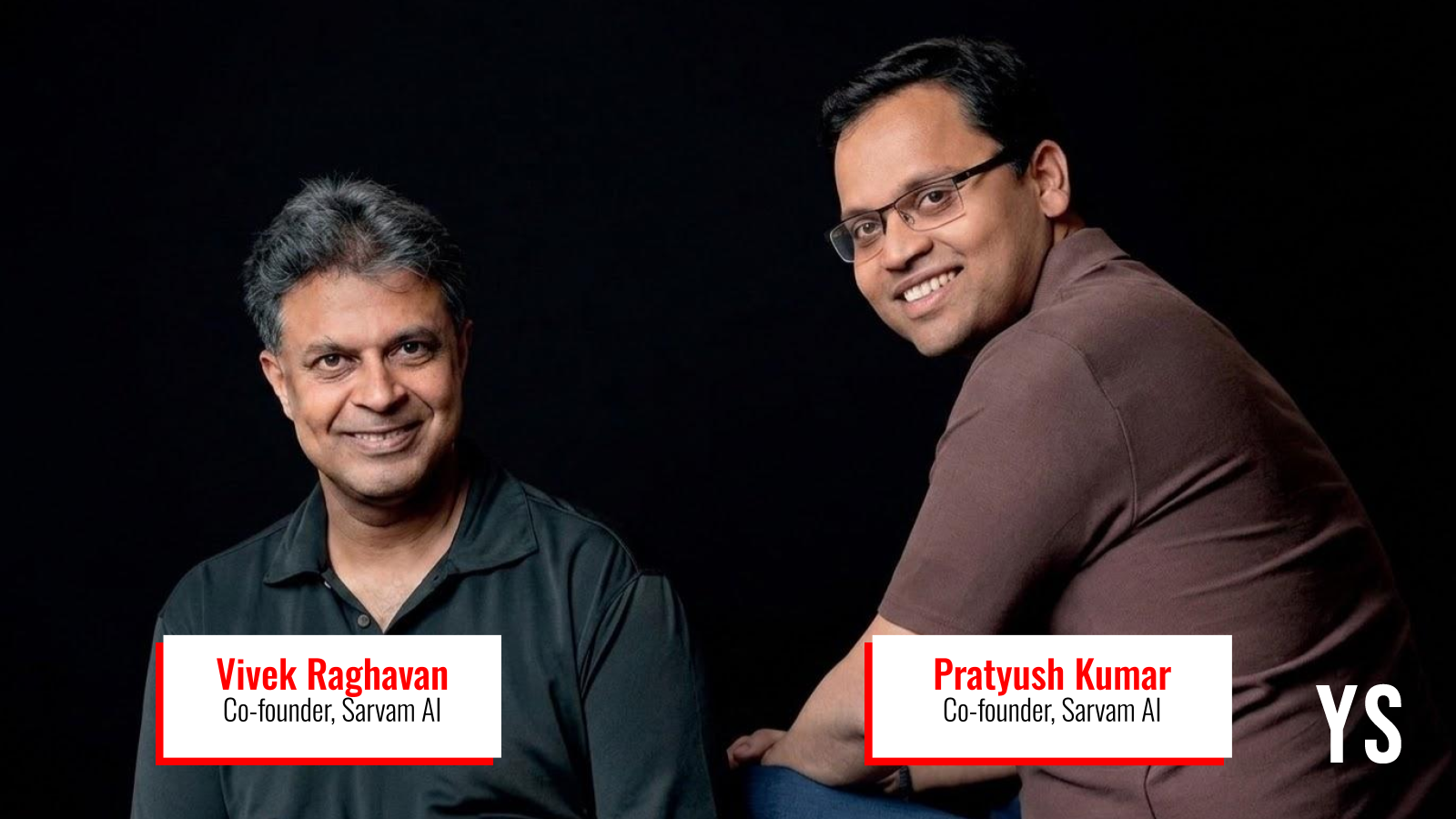
Co-founder Pratyush Kumar contends that a model’s country of origin and the location of the infrastructure on which it runs are two different matters. Token Factory serves open-weight models on GPUs procured privately without government support, he says.
After Sarvam AI’s Token Factory attracted both support and criticism, particularly over its inclusion of Chinese-developed AI models, co-founder Pratyush Kumar has sought to address the questions surrounding the platform’s funding, use of computing resources, and its relevance to Sarvam’s indigenous AI ambitions. Kumar said the IndiaAI Mission offered around 20 startups access to graphics processing units (GPUs) at a 40% discount. Sarvam used this support to train its 105-billion-parameter model from scratch. He noted that the government did not fund Sarvam directly, with the subsidy instead going to GPU cloud providers. Launched on November 16, Token Factory allows developers and businesses to access multiple AI models through a single application programming interface (API), with charges based on the number of tokens processed. Tokens are small units of text that an AI model reads or generates, while inference is the process of generating responses using a trained model. The platform’s catalogue includes Sarvam’s own model alongside open-weight systems such as DeepSeek, Kimi, GLM and Google’s Gemma. Open-weight models make their trained parameters available for others to download and run. Kumar emphasised that this business operates independently of the government-supported training effort. “We serve multiple open-weight models on GPUs we have privately procured, without any government support,” he said. Sarvam has also said that its subsidised compute allocation ended in March 2026. The inclusion of Chinese-developed models has fuelled the debate over technological sovereignty. Sarvam’s position is that a model’s country of origin and the location of the infrastructure on which it runs are two different matters. Hosting open-weight models on Indian GPUs means prompts need not be sent to overseas model providers. However, domestic hosting does not make a foreign-developed model Indian or transfer its intellectual property. Nor does it, by itself, resolve concerns
Verified Source Intelligence
YourStory
Sarvam defends AI strategy amid debate over hosting Chinese models, says focus on own models continues
Read on YourStory