
Anthropic researcher tunes chess software to turn a 200 MHz Pentium Pro into a behemoth that would handily defeat Kasparov and Carlsen
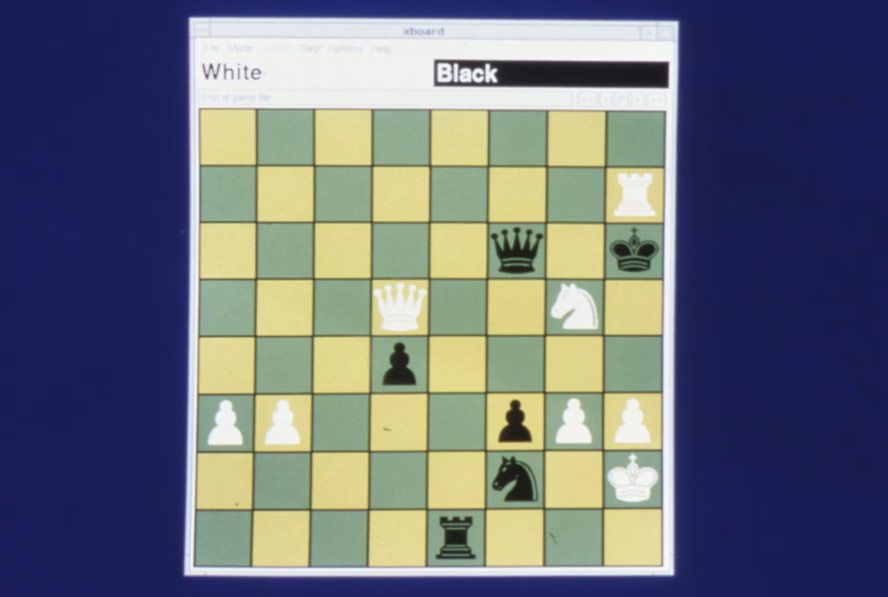
Anthropic researcher tunes chess software to turn a lone Pentium Pro into a behemoth that would handily defeat Kasparov and Carlsen — 1995 challenge would have a different outcome with today's software
Readers with back pain probably recall the much-discussed 1996 chess challenge, wherein the world champion Gerry Kasparov faced off against IBM's Deep Blue chess-optimized computer. The nascent clanker lost the match with a 4-2 total, but still stunned the world by being the first piece of electric sand to win a single game against a grandmaster. Modern chess engines will utterly destroy any human, but Anthropic engineer Nicholas Carlini wondered if granting old hardware new bytes would give the machine a better chance. Spoiler: yes, indeed it would . To understand the task, here's a quick primer on chess scoreboards. A player is rated worldwide with an Elo system (first devised for chess), wherein they lose or gain points in proportion to the difference to their opponent's rating — meaning that winning a match against Magnus Carlsen would net you a lot of points versus defeating me, who only learned about the en passant rule a handful of years ago. At his prime, Kasparov ranked about 2800 points. Given that Deep Blue eventually barely won against him in a subsequent rematch, that is a good starting point for any. Contemporary chess engines like Stockfish have an estimated Elo of about 3,300, far higher than any human — guaranteeing it'll win most matches against a human. Nicholas Carlini got hold of a 1995-era machine, packing a Pentium Pro CPU with all of its 200 MHz of clock speed, and 64 MB of RAM. For his first experiment, he grabbed Crafty, a 1996 chess engine, and measured how well it would do. It came in at 2,000 Elo with 1 second allotted, and 2,400 @ 10s. Running that software on a Ryzen 7 resulted in a 2,600 rating — good, but not enough. Since Crafty's source code is available, he got Claude to mod it with modern features, and eventually reached a ceiling of 3,000 Elo @ 10s per move. That's quite an impressive feat already, especially considering that the lone Pentium Pro represented but a small fraction of the hardware that Deep Blue had. An Elo delta o
Verified Source Intelligence
Tom's Hardware
Anthropic researcher tunes chess software to turn a 200 MHz Pentium Pro into a behemoth that would handily defeat Kasparov and Carlsen
Read on Tom's Hardware